:FUNCtion:PARameters:DFEQualizer:WIDTh
Command Syntax
:FUNCtionN:PARameters:DFEQualizer:WIDTh <pct_of_UI>
<pct_of_UI> is a Double.
Where N identifies one of up to 64 possible operators {1:64} that can be defined as part of a math function. The operators are numbered in the order that they were originally added to the function.
Query Syntax
:FUNCtionN:PARameters:DFEQualizer:WIDTh?
Description
 Specifies the percentage of the unit interval, centered on the clock location, to optimize taps for.
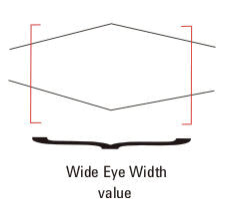
You can enter values from zero to one. For example, if the eye width is set to zero (0), taps are optimized for only the voltage specifically at the clock location of each unit interval. If the eye width is set to 0.2, taps are optimized for the voltage in 20% of the unit interval centered on the clock location. If the eye width is set to one (1), taps are optimized for voltage in the entire unit interval.
For DFE, true receivers sample data only at the location of the clock so a value of 0.0 UI (unit interval) is used as the default. If you want to include more of the eye, simply set this number to a higher value (0.0 UI - 0.5 UI would make sense for DFE).
The jitter of the clock relative to the data will affect the eye width you should choose. If you have no jitter, you can choose an eye width of zero (0) because the data waveform will always be sampled at exactly the right time. If you want to accommodate some jitter, choose a higher eye width.
If you are unsure about what value to enter here, but do not want to use the default, think about whether you have more margin vertically or horizontally (where is your uncertainty?). If you optimize the tap values for a narrow portion of the unit interval, your eye will have a greater peak, but only near its center.
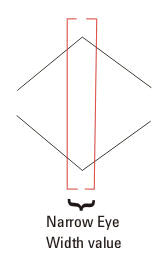
If you optimize the tap values for more of the unit interval, your eye will not be peaked as high, but will be more spread out horizontally.